
Veliko Tărnovo
Veliko Tarnovo is a historic city located in central Bulgaria. It’s known for its picturesque setting at the top of three steep hills, overlooking the Yantra River.
The city has a rich history dating back to Roman times, but it’s most famous for its role as the capital of the Second Bulgarian Empire during the Middle Ages. The city is known for its well preserved medieval architecture, featuring narrow cobblestone streets and traditional houses .
Today it is a top tourist spot offering an insight into Bulgaria’s past.
We arrived in the afternoon and it was very hot, too hot to go and see anything.
We were parked in a car park and we managed to stay in the shade.
We were parked very close to The Asen’s Monument which is quite a significant landmark. It commemorates the Asen dynasty, a medieval Bulgarian royal family that ruled during the Second Bulgarian Empire (12th-14th century) The monument stands on Tsarevets Hill and insists of three very large bronze figures. Tsar Asen, Tsar Peter and their sister Princess Kaloyan. It is a symbol of national pride and a popular tourist attraction.

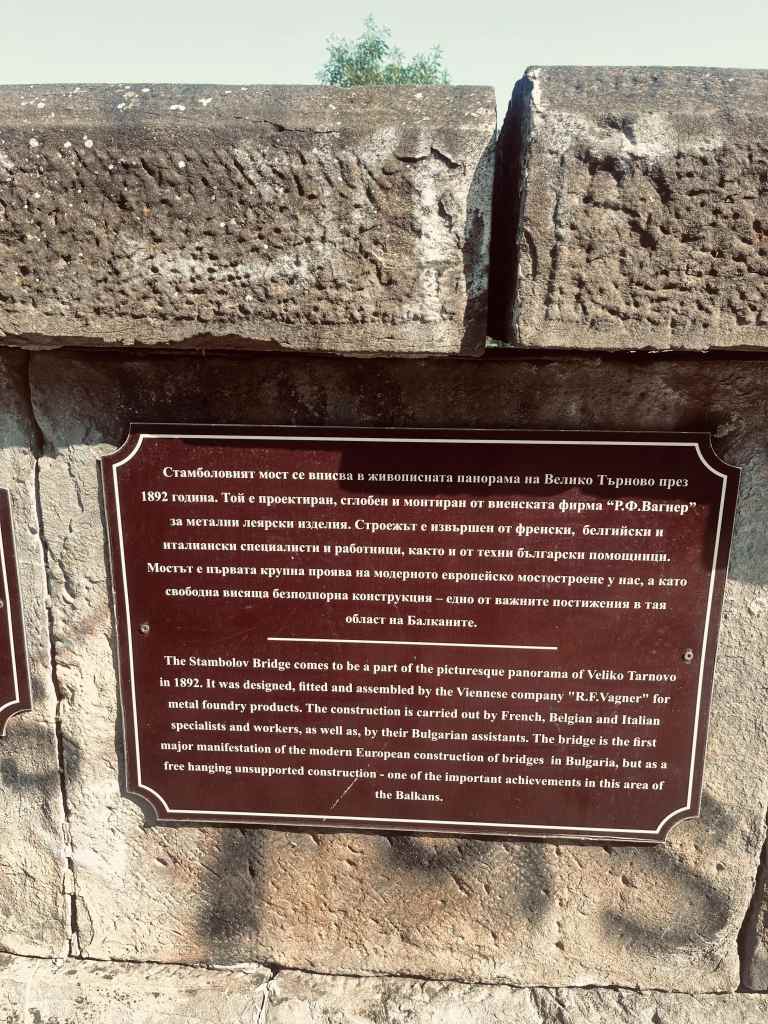
In the morning after we went and had a look at Asens Monument we went to see Gurka Street. But first we had to go across the Stambolov Bridge, another famous landmark in Veliko Tărnovo that crosses the Yantra River and was built in 1897.


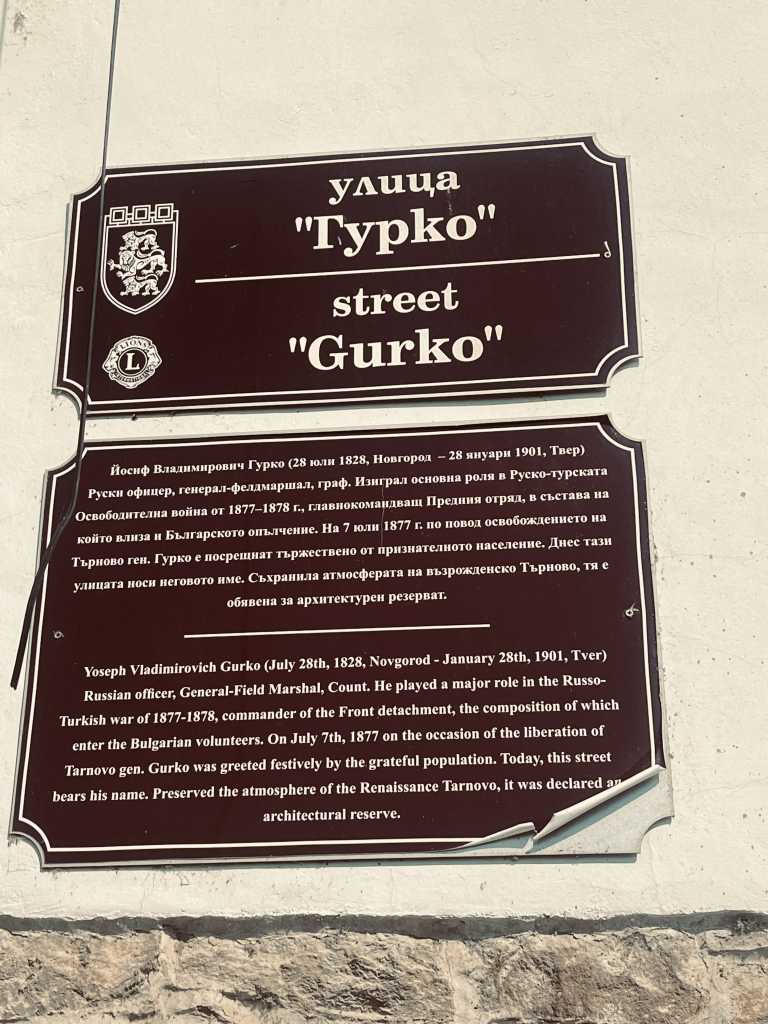
Gurka Street is the oldest street in Veliko Tărnovo, it’s a cobblestone road that winds its way through the Old Town. Many of the houses were built during the 18th and 19th centuries.
Gurko Street is lined with quaint shops, cafes and art galleries, you can definitely see the history and the culture.
It also has some great views of the Yantra River and The Assens Monument.


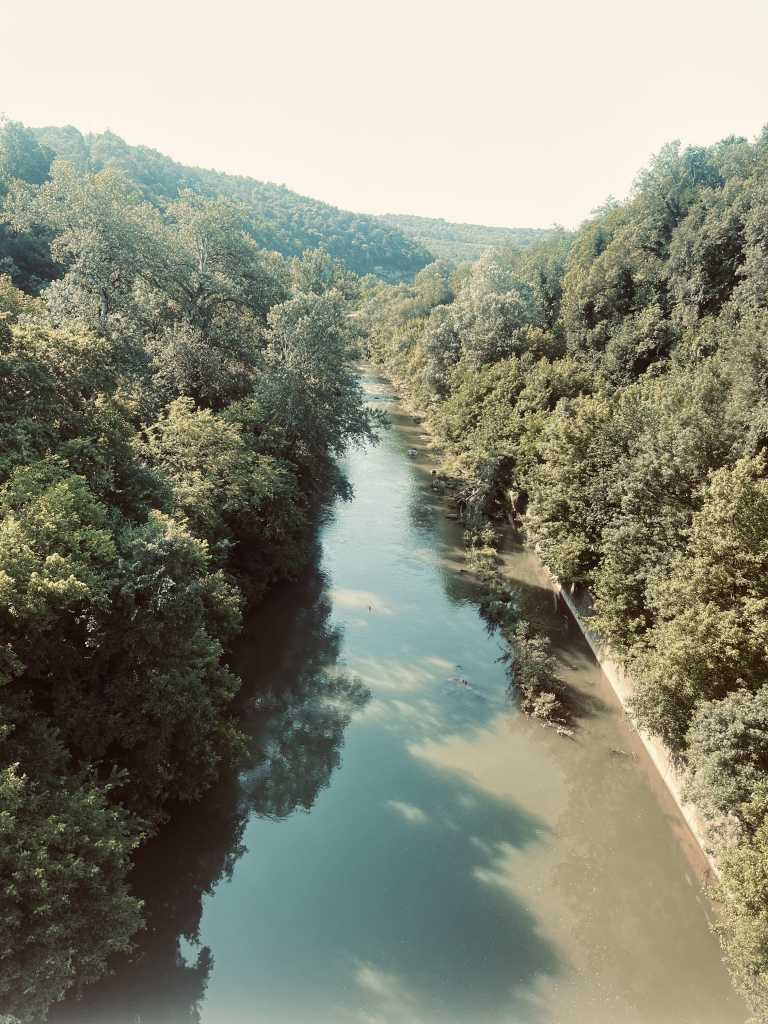

By the time we’d walked the length of Gurka Street and back it was really hot again! Definitely time to move on.
Buzludzha Monument
Our next stop was in the mountains so it was going to be cooler!
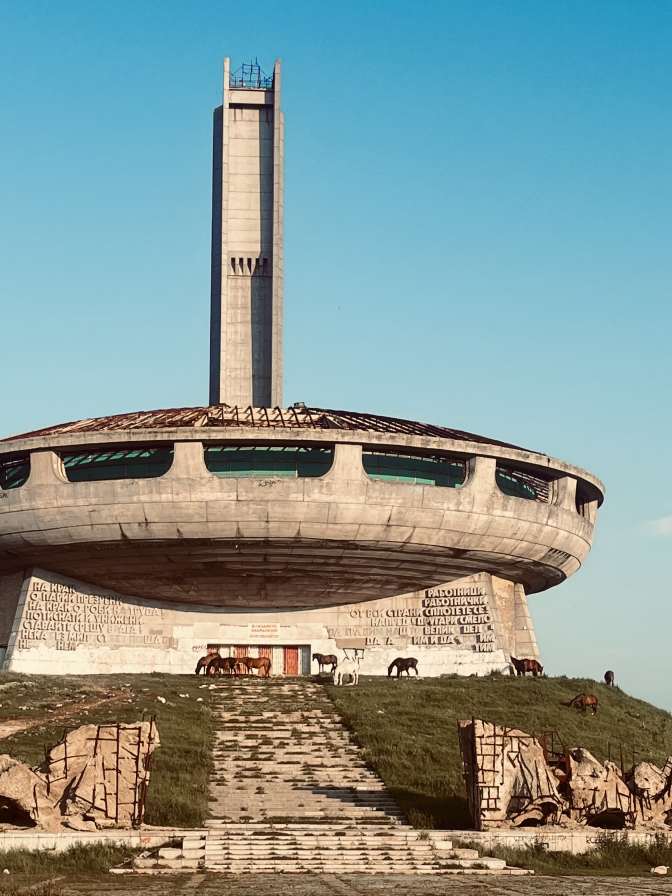
The Buzludzha Monument, built on Buzludzha Peak, located in the Balkan Mountains of Bulgaria, is an iconic and imposing structure built during the communist era. Completed in 1981, it served as the House-Monument of the Bulgarian Communist Party. It was open to the public and used for official parties and events.

Its striking design features a saucer-shaped building adorned with a prominent red star.
The monument was abandoned after the fall of communism and the collapse of The Soviet Union in 1989 and has since fallen into disrepair.


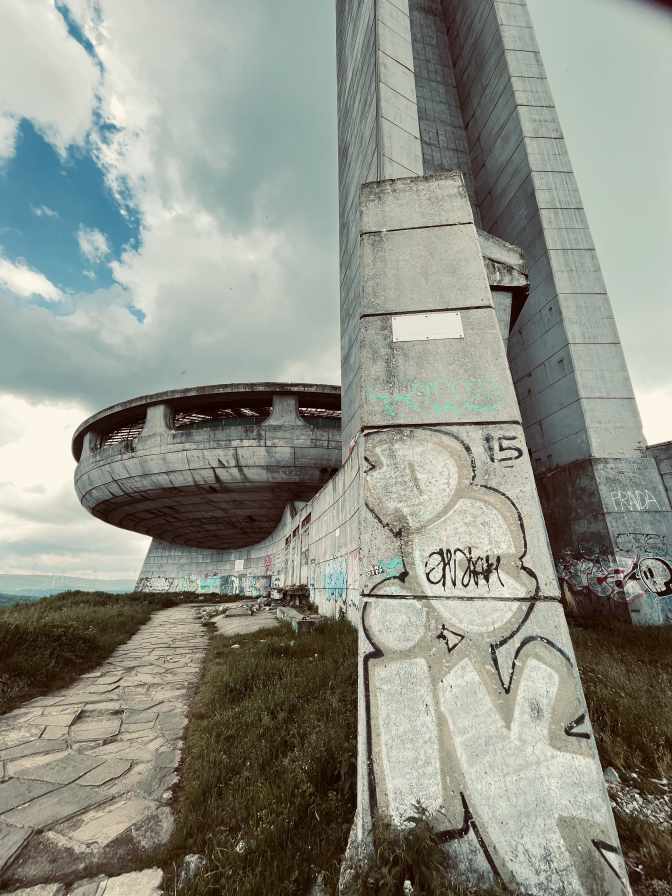
As you can see from the photos the monument is enormous and it is very high up in the mountains. It was nice to be somewhere cooler.
Our park up was a car park just at the foot of the monument.
It was very quiet and serene and definitely had an eerie feel to it. We did walk up to it and have a look round when we first got there but then we went back to see the sunset and took some beers with us.
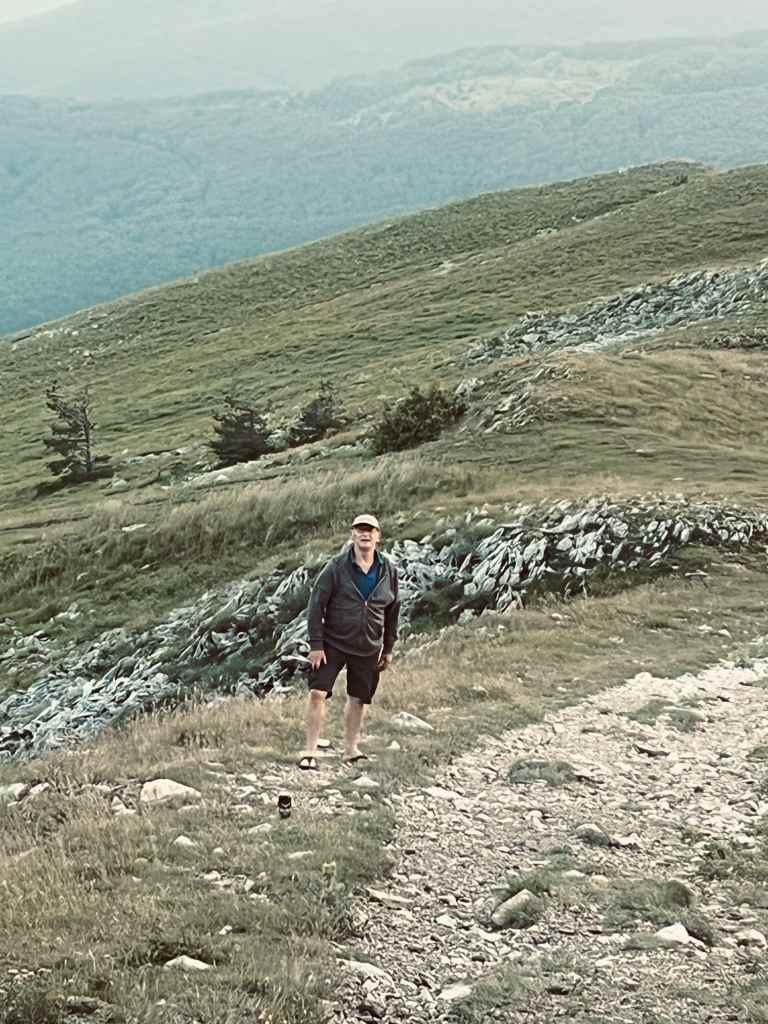

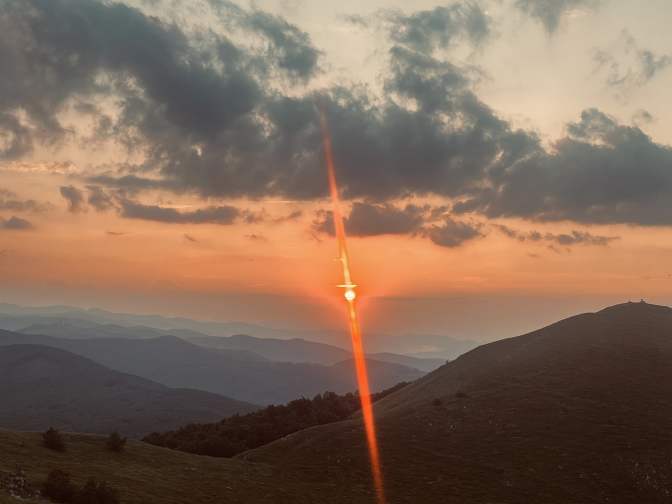
In the morning at around 7am we walked up to the monument. I was looking for a yoga spot. It was a pleasant surprise to see wild horses. There were loads of them.
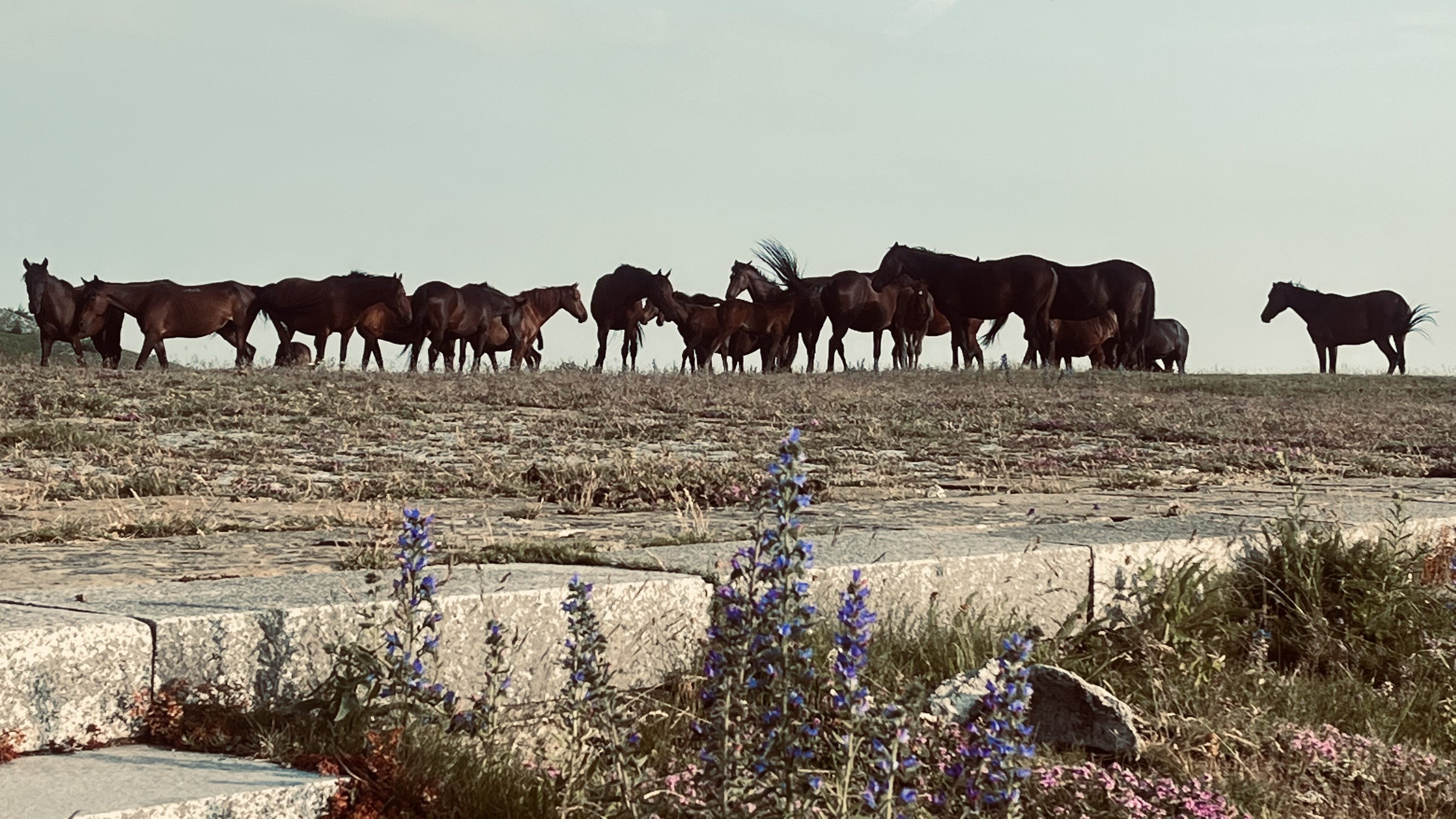


Plovdiv
Plovdiv is the second-largest city in Bulgaria. It is is a blend of ancient history but very vibrant.
This city dates back 6,000 years, making it one of Europe’s oldest continuously inhabited cities. The Old Town is well preserved and complete with Roman amphitheatres, medieval walls, and charming cobblestone streets.
Plovdiv’s diverse cultural scene is reflected in its numerous art galleries, museums, and theatres. The city was designated as the European Capital of Culture in 2019, a must see destination.
Visitors can explore the Roman Stadium, the Ancient Theatre of Philippopolis, and the vibrant Kapana District, known for its artistic flair and trendy cafes.
Our park up was right by a park and had some shade luckily. It was extremely hot when we arrived in the afternoon. It was a case of sitting in the shade and waiting until around 7pm when it was a little bit cooler to go out. It was about half an hour to walk into The Old Town and was a nice walk through the park.
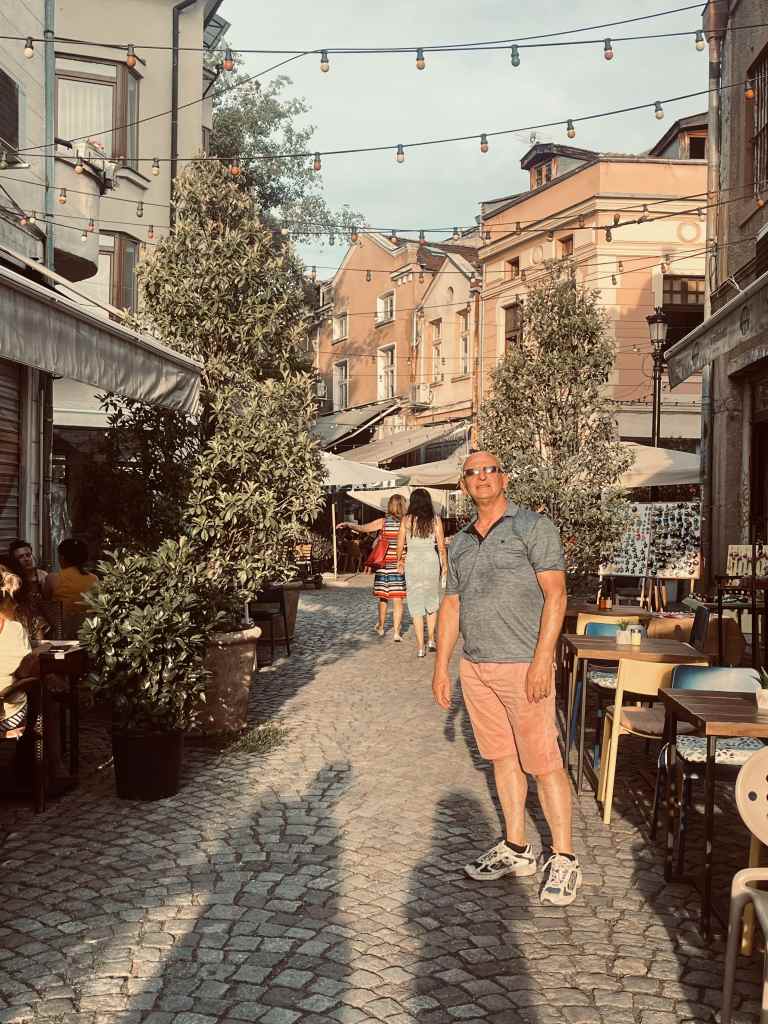
Plovdiv immediately had a really nice feel to it. There was lots of lovely cobbled streets and arty cafes. There was also lots of people and it had a really good “buzz” about it.


We did see the ancient theatre and ruins. There was a concert going on inside the enclosure so we weren’t allowed inside and didn’t manage to take any photos. Here is a photo of the amphitheatre and ruins but it isn’t one I took.

There were so many good things to see, that it didn’t really matter. Here’s a few including The History Museum, The Mosque and some street arts. As you can see very diverse, history and culture combined!



There were a few statues around Plovdiv outside some of the art galleries. Here is one that we had some fun with.


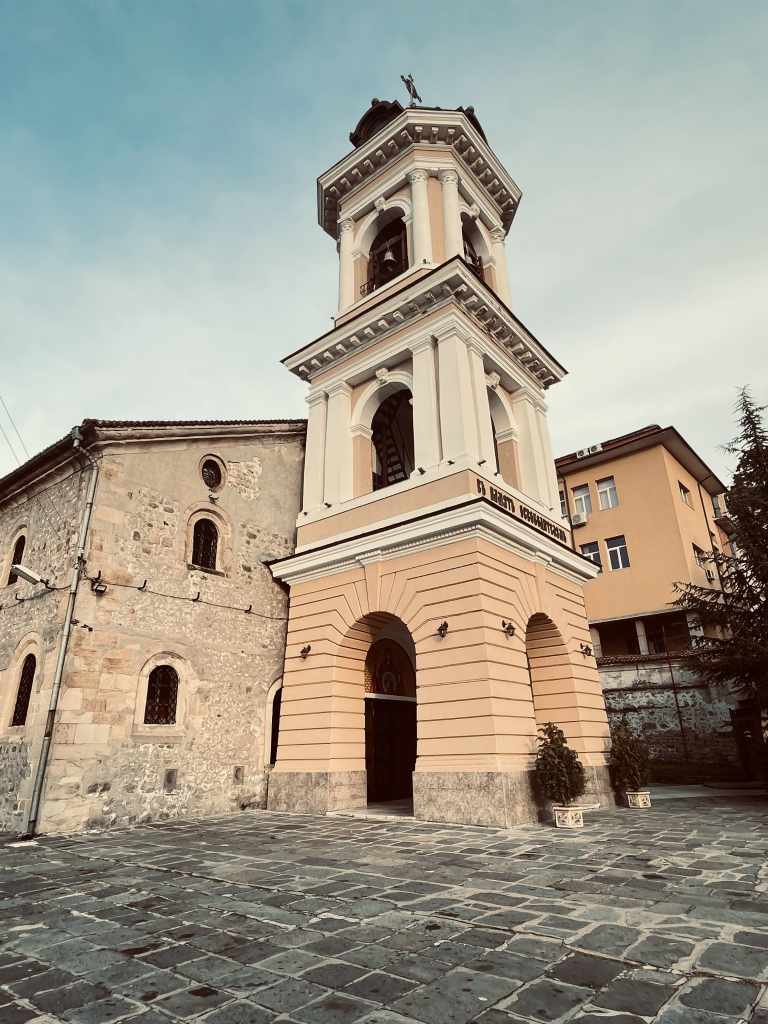
We also had a look at this church in Plovdiv which was actually quite modern.


Just as it was starting to get dark we decided it was time to wander back through the park to our park up. We really liked Plovdiv it was a very unique and interesting city. I really would have liked to spend more time there and go and see it in the day time, but sadly in July it was just too hot. I would definitely recommend going when it is not in the heat of summer.
For our next park up we were heading south and also into the mountains in the hope that it would be cooler! Our next post will start at a lake park up in a place called Smolyan. We hope you can join us.
If you would like to get notified every time a post goes live then please fill out your email below and hit subscribe.
You can also follow us on Facebook and Instagram just click the icon below

 Our Life on the Road