
I don’t think I’d even heard of fortified churches until I went to Romania. A fortified church is a church that is built to serve a defensive role in times of war.
The south eastern Transylvania region of Romania has one of the highest numbers of existing fortified churches from the 13th -16th centuries. We visited 2 of them. The first one was the Fortified Church of Prejmar which we visited on the way to the city of Brașov. It is in fact on the outskirts of Brașov
Fortified Church Prejmer
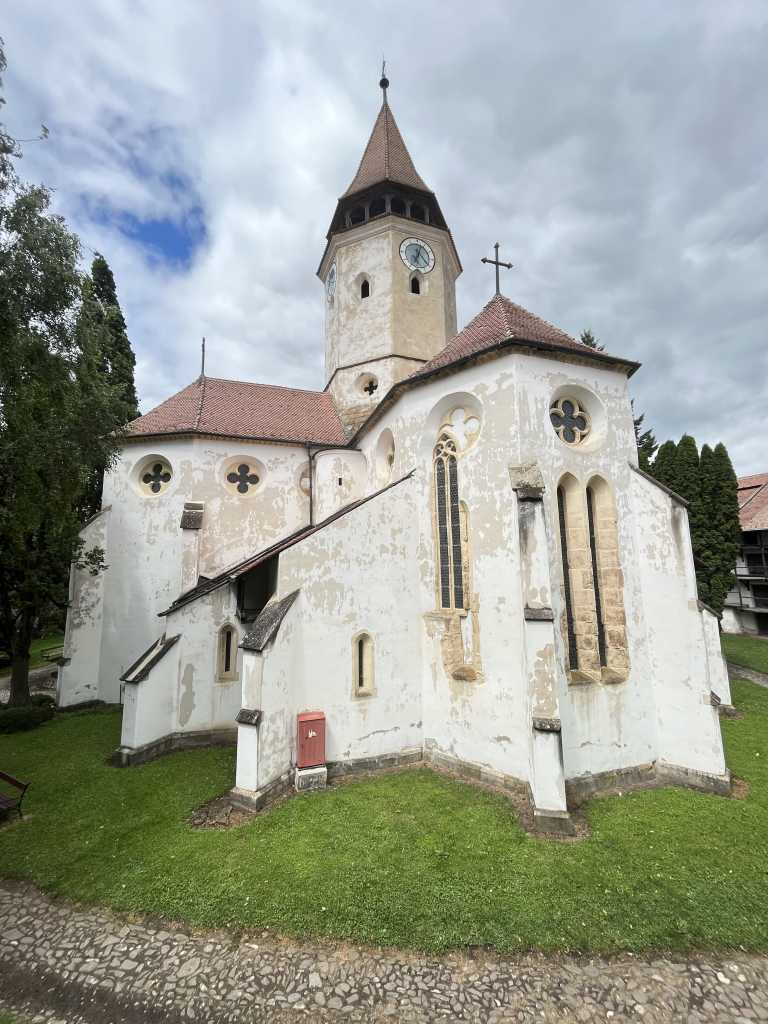
The fortified church at Prejmer, located in Transylvania, dates back to the 13th century. Built by the Teutonic Knights, it served as a place of worship, a residence, and as a refuge for the local Saxon community. The church was designed with high walls, a fortified tower and a surrounding moat. It’s purpose was to provide a haven for the local community during times of conflict, allowing residents to take refuge inside the fortified walls.
The layout of the Prejmer fortified church is unique, featuring a central area surrounded by thick walls that house living quarters for the community. Each family had its own small room within the fortification, creating a self-contained, defensive village. The church itself stands prominently in the centre, with a blend of architectural styles ranging from Romanesque to Gothic.
Over the centuries, Prejmer faced numerous invasions and sieges, including attacks by Mongols and Ottomans. Despite these challenges, the fortress was successfully preserved.
In 1999, it was designated as a UNESCO World Heritage Site, recognising its historical significance and well-preserved medieval architecture. Today, the Prejmer Fortified Church stands as a testament to the resilience of the Transylvanian Saxons and their unique approach to communal defence.

There is plenty of parking opposite the church, this photo was taken from the opposite side of the road.
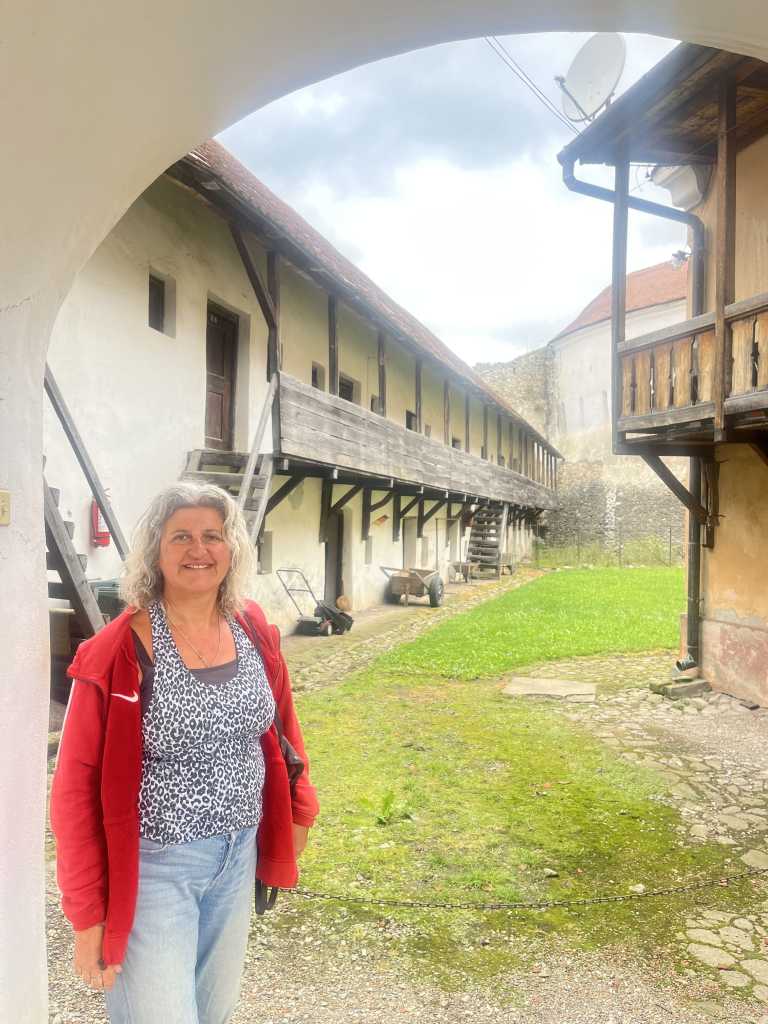
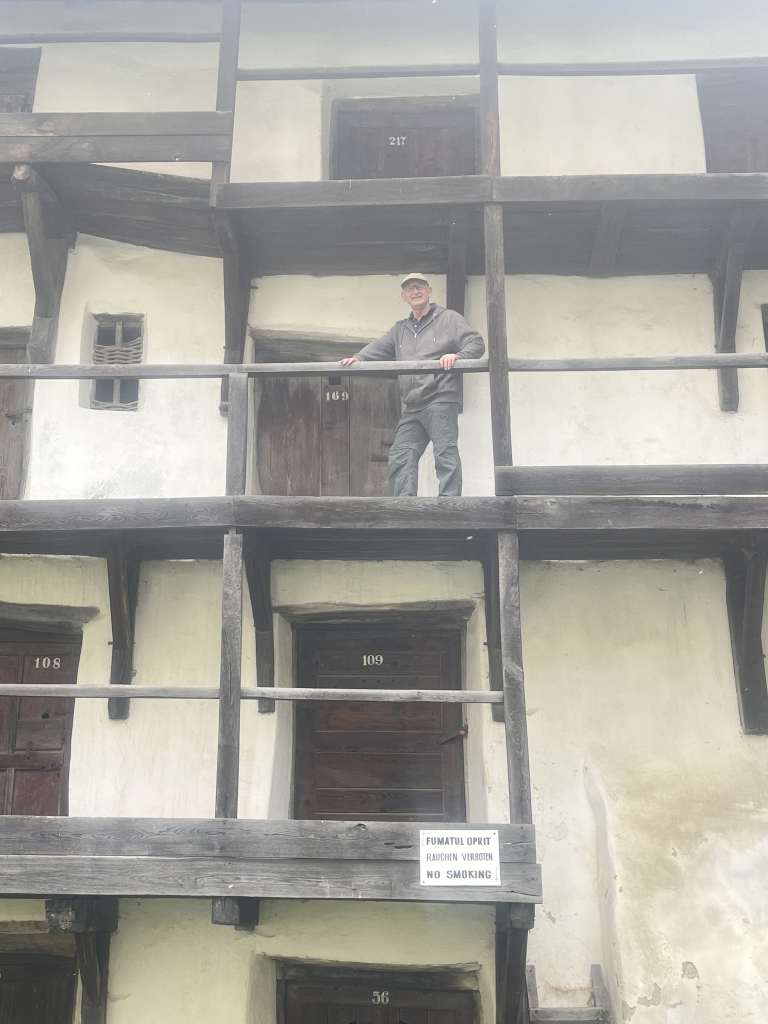
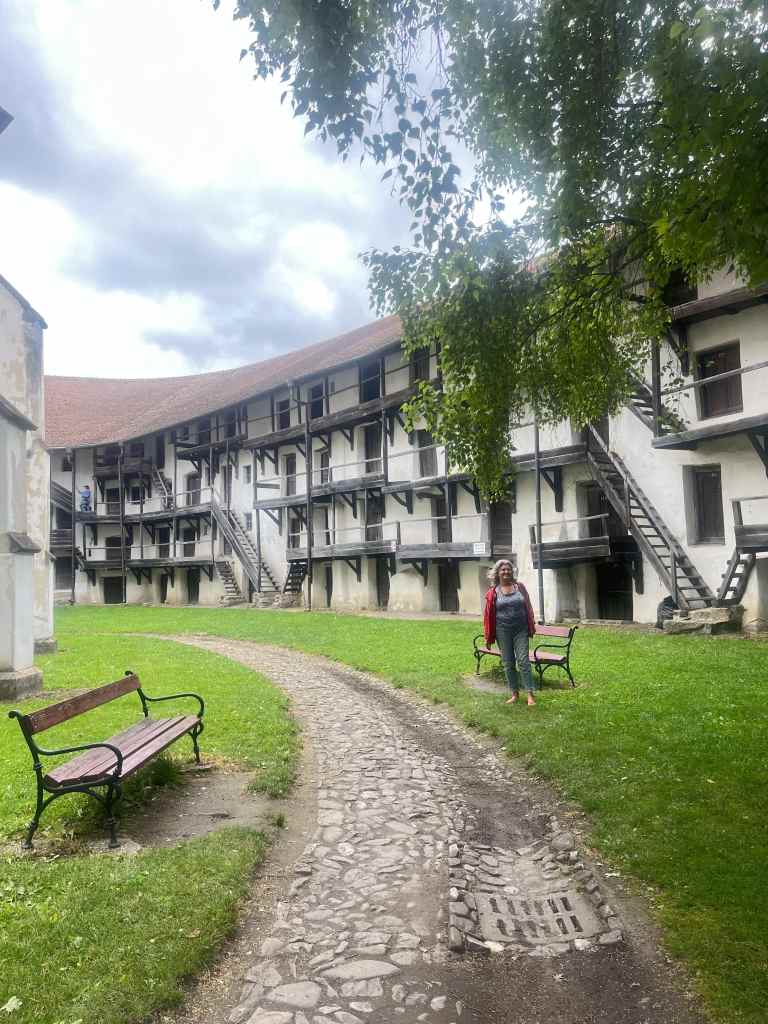
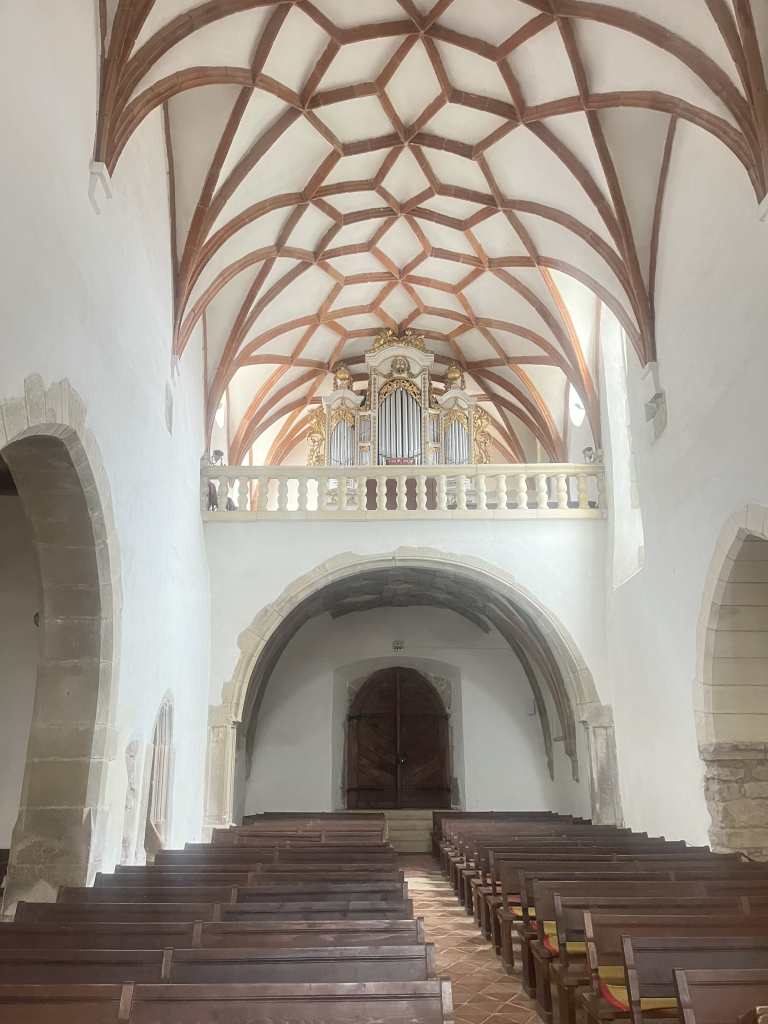

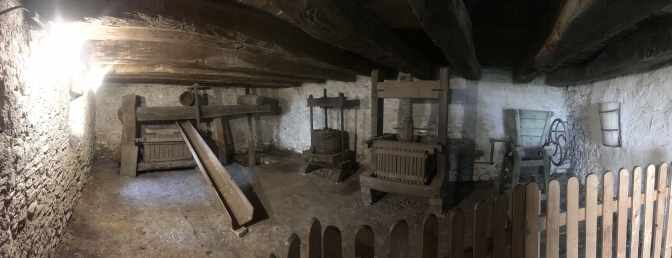
Some of the rooms inside the out buildings had been used as workshops and you could still see the remains. Below is an example of one of them
Brașov
Our park up in Brașov was actually in a shopping centre. There was one end where all the vans parked and were tolerated by the locals. From there you can get a bus into the city centre. We stayed for 2 days.
Brașov turned out to be an amazing city and well worth visiting if you’re in Romania. The city is surrounded by the Carpathian Mountains. There are lots of things to see in Brașov including The Black Church, initially named for it’s blackened walls after a fire, now a symbol of resilience, Saint Catherine’s Gate, Rope Street, The Old Synagogue and Romania’s first school and the cable car that takes you to the top of Tampa Mountain .



The Black Church, is a Gothic-style church dating back to the 14th century. Originally named St. Mary’s Church, it earned the moniker “Black Church” after a fire darkened its walls in the 17th century. We didn’t actually go inside, but it houses the largest church organ in Southeastern Europe and a stunning collection of Anatolian carpets.
It serves as both a religious and cultural landmark, hosting concerts and events throughout the year. It is a popular landmark whether you choose to go inside or not.
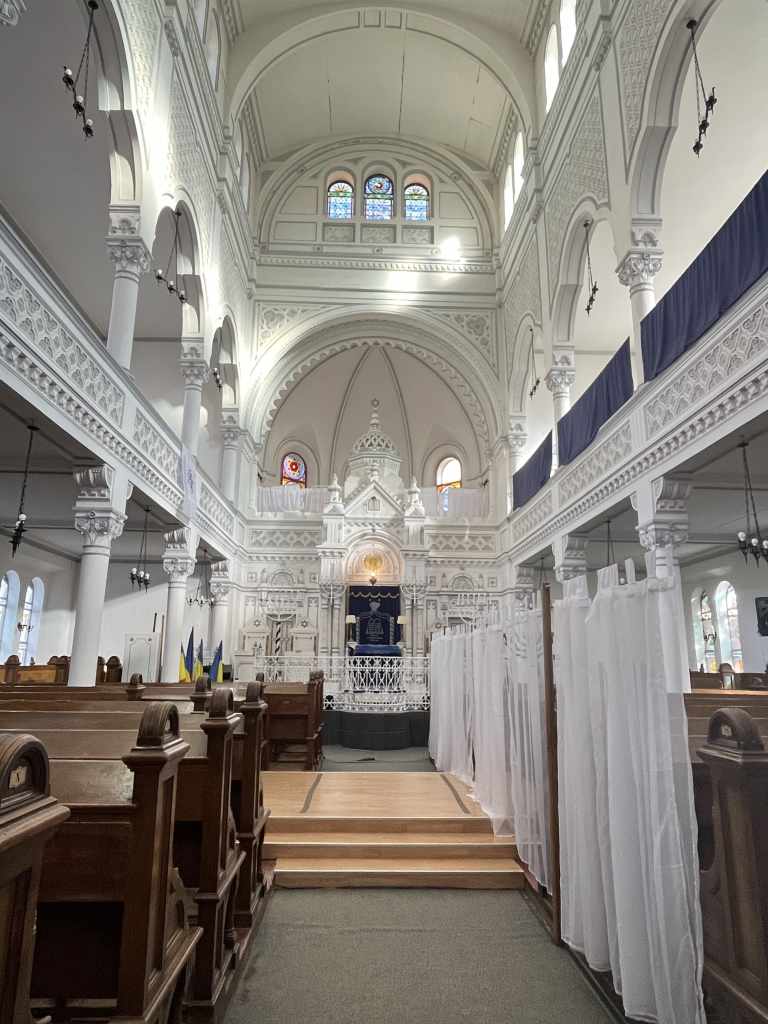
Beth Israel Synagogue is a significant landmark of Jewish heritage in the region. Constructed in 1901, it showcases stunning Moorish-style architecture, featuring intricate designs and vibrant colours. The synagogue served as a place of worship and community for the Jewish population of Brasov. Despite facing challenges during World War II and the communist era, it has been restored and continues to stand as a testament to the resilience of the Jewish community in Romania. It’s is well worth a visit, there is a lot of Jewish history in Romania and being Jewish myself I wanted to go and see it.
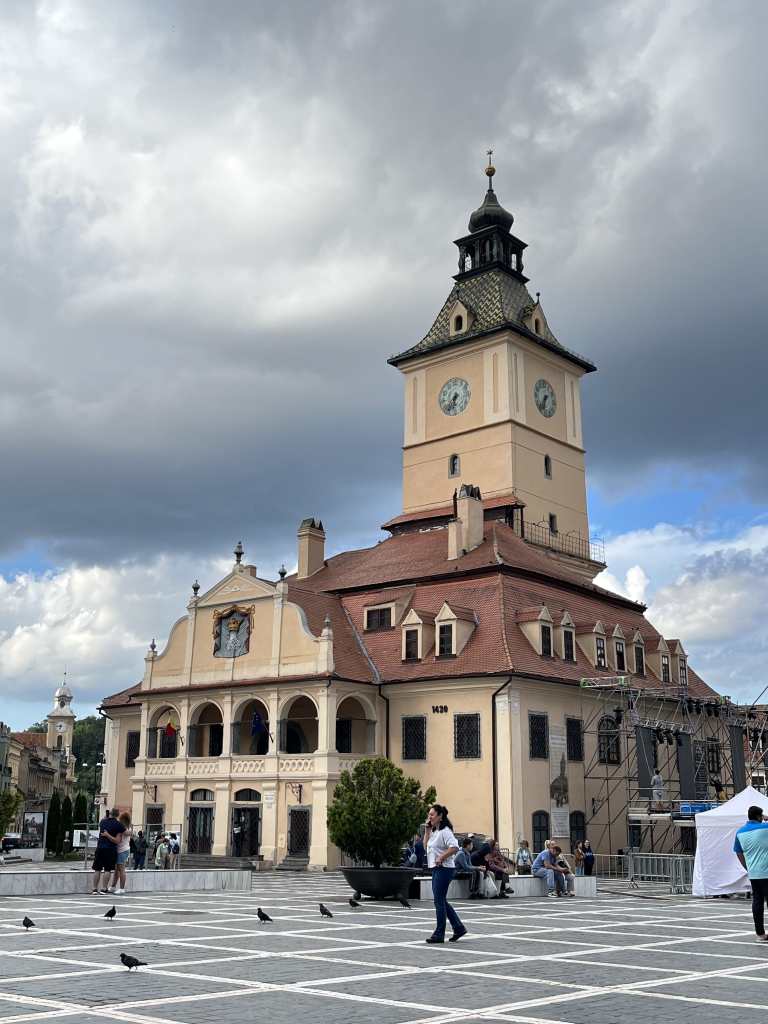
The Council House, or Casa Sfatului, is a historic landmark dating back to the 15th century. It was originally a meeting place for the town council, it is now a museum showing the city’s history and culture. We chose not to go inside but it’s medieval architecture is striking. The square hosts festivals, markets, it is very vibrant and there are lots of cafes to stop and have a coffee.
St. Catherine’s Gate, is a historic landmark dating back to the 16th century. This well-preserved gate served as one of the main entrances to the fortified city and is adorned with Baroque architectural elements. It stands as a testament to Brașov’s rich medieval history and is a popular attraction for visitors exploring the city’s charming Old Town.
Strada Sforii (Rope Street)
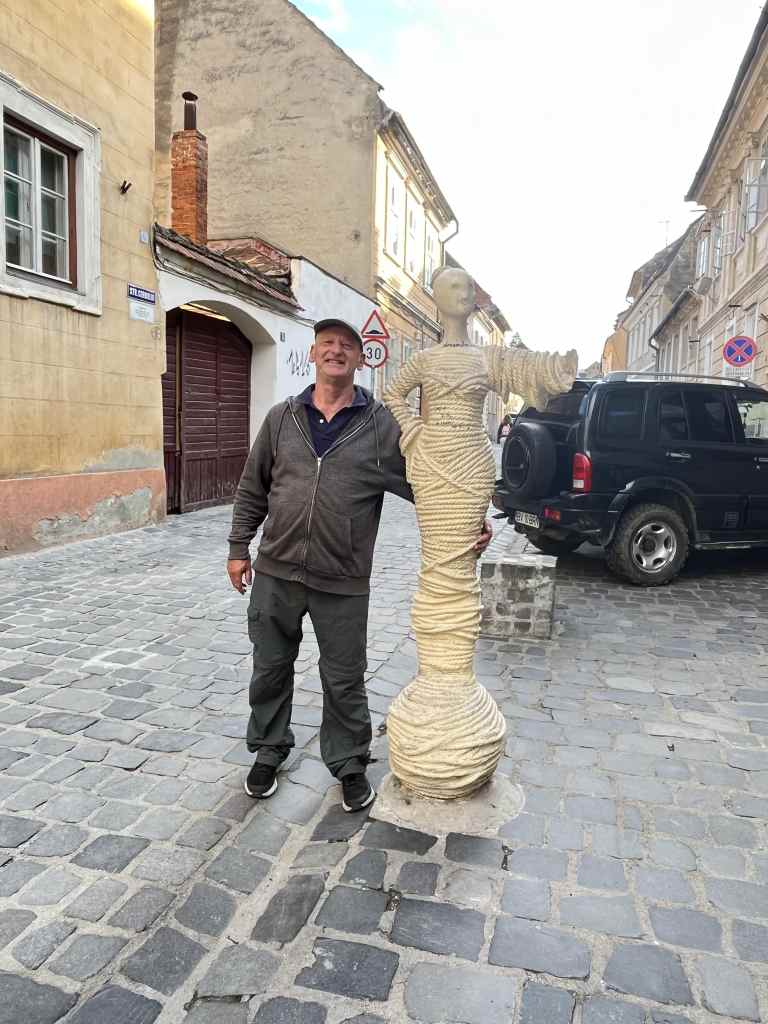
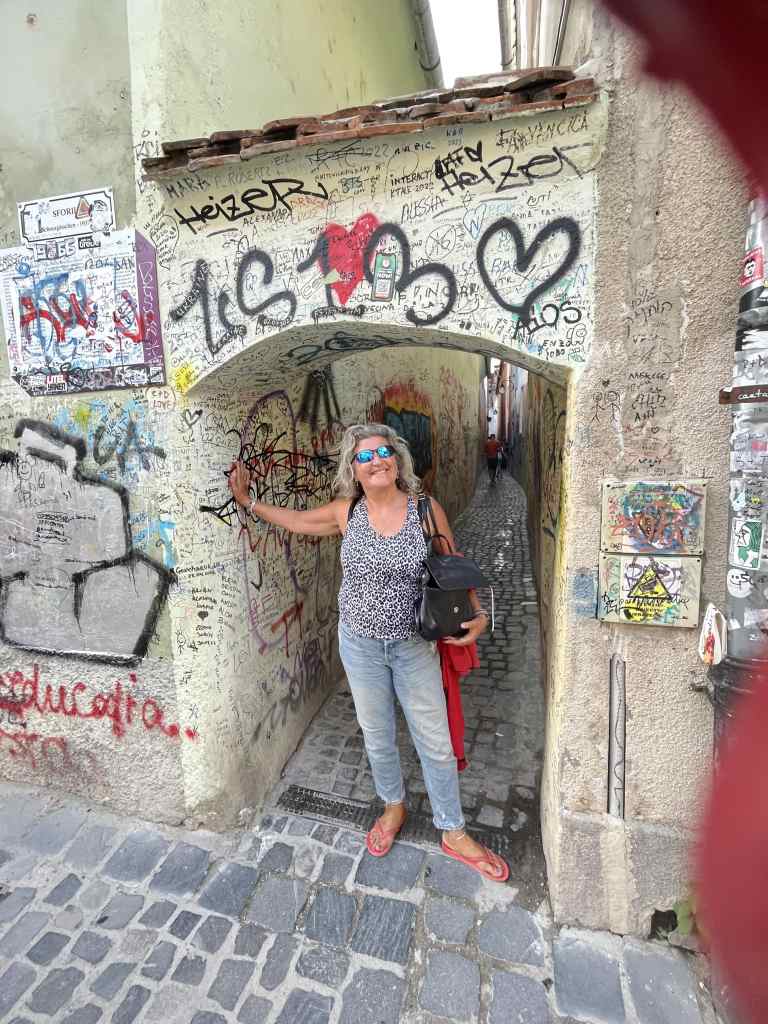
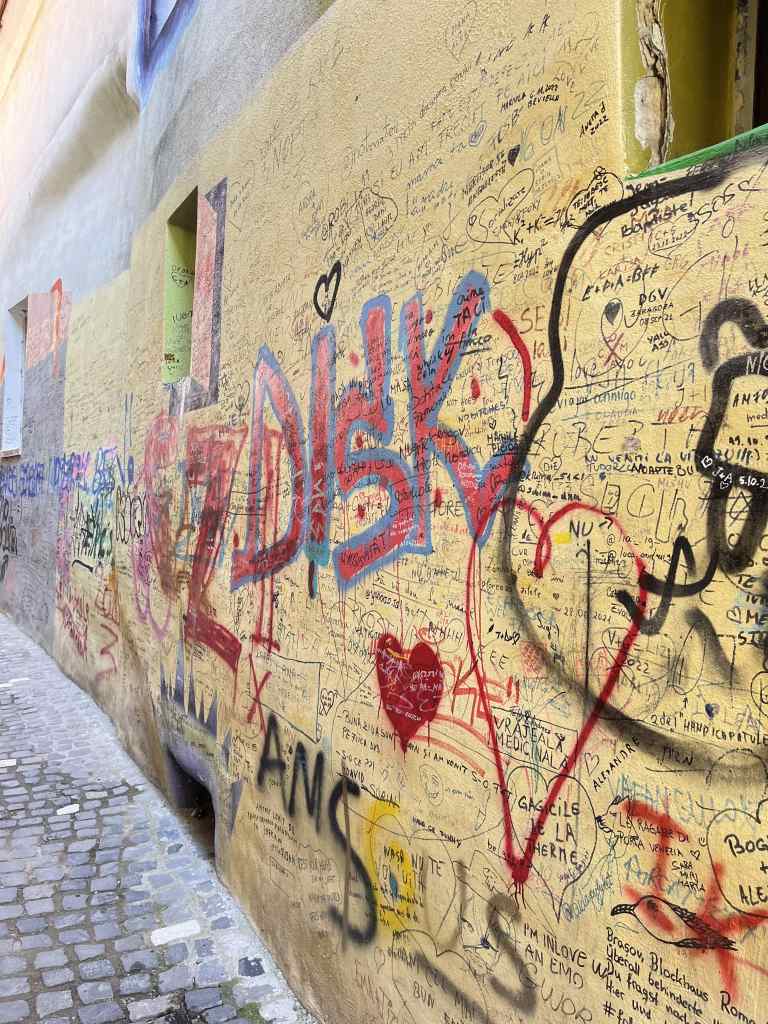


Strada Sforii—which translates roughly as “Rope Street”—was built in the 15th century to allow fire fighting brigades passage between the major thoroughfares at either end. At one end is the statue that Dee is standing with in the first photo, and the you can see me at the other end of the street in the 2nd photo.
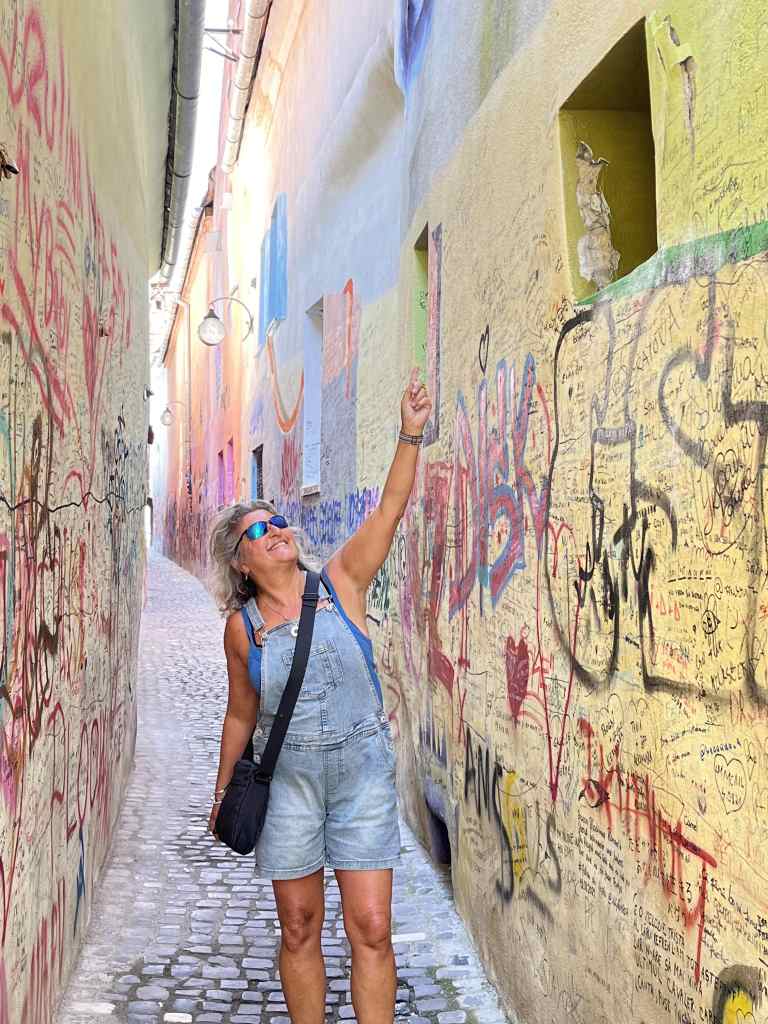
The street is 80 metres long and width varies between 111-135cm. It is the 3rd narrowest street in Europe, after Spreuerhofstraße in Reutlingen, Germany and Parliament Street in Exeter, England. At it’s narrowest point it is possible to touch both walls.
As you walk through you will notice lots of lovely art, thoughts and messages on the walls from people around the world. There was in fact no space to write anything! Dee however found an ingenious way that we could still leave our mark.

The First Romanian School
The first Romanian school is well sign posted and like most things walking distance from most of the sites. It is located in the grounds of St Nicholas Church. The church as built in the 14th century and the school is believed to have started in 1583. The school remained in use right up until 1941. It is now a museum and it is quite interesting, definitely worth the walk if you are in Brașov
Tampa Mountain

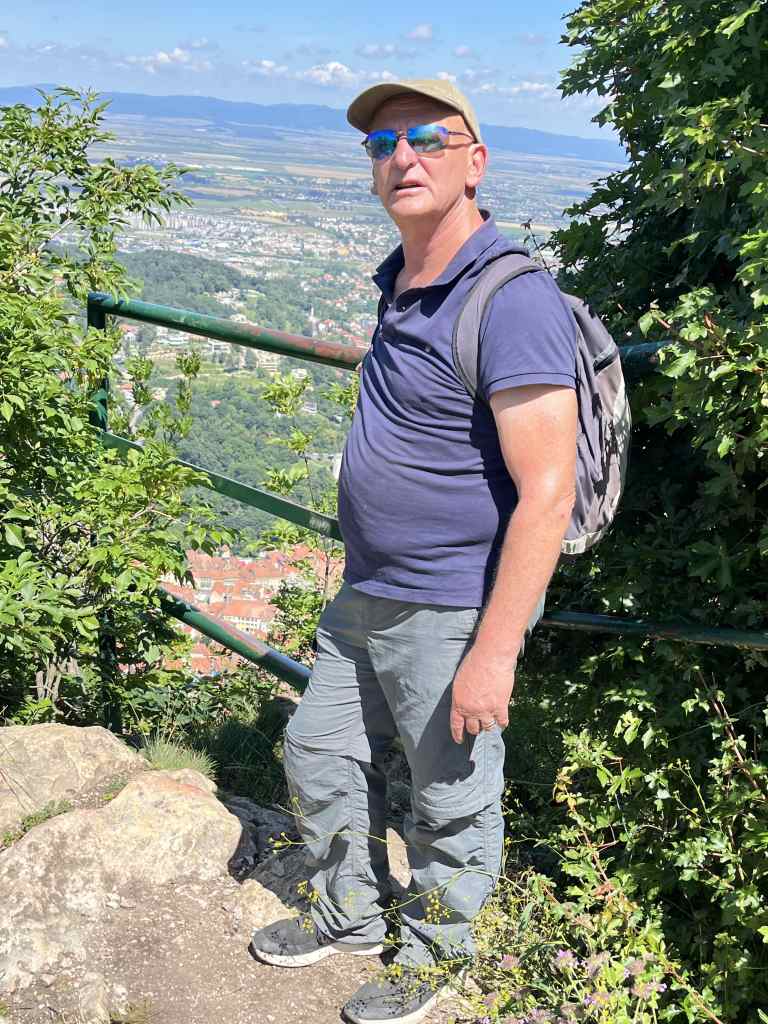
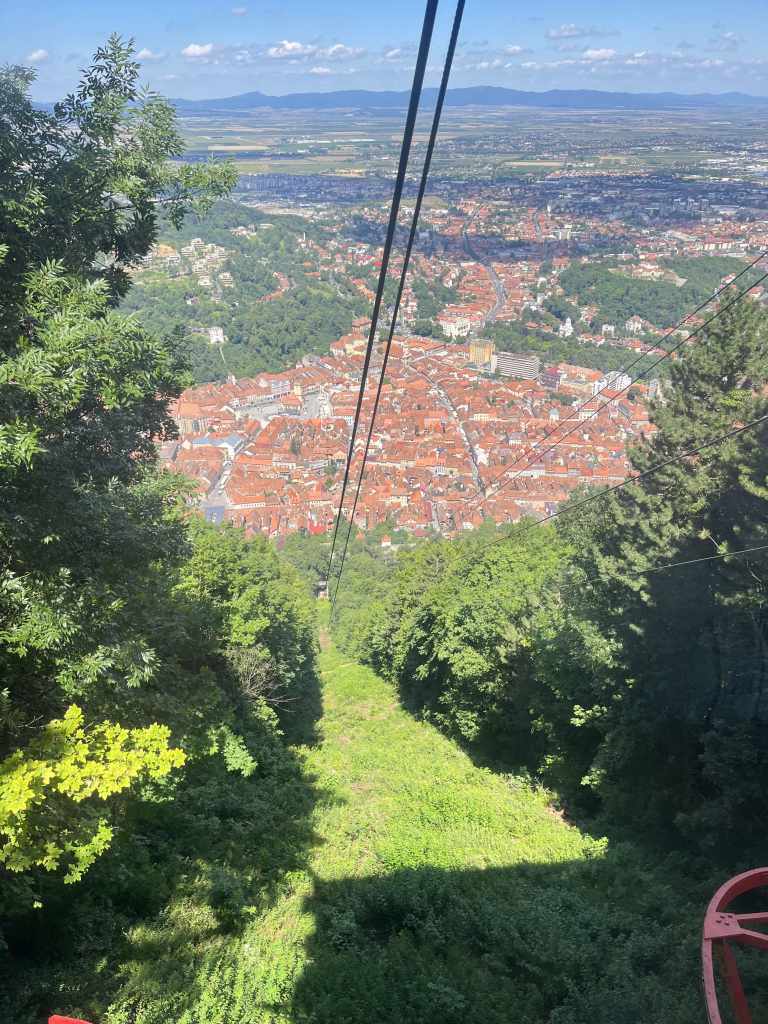
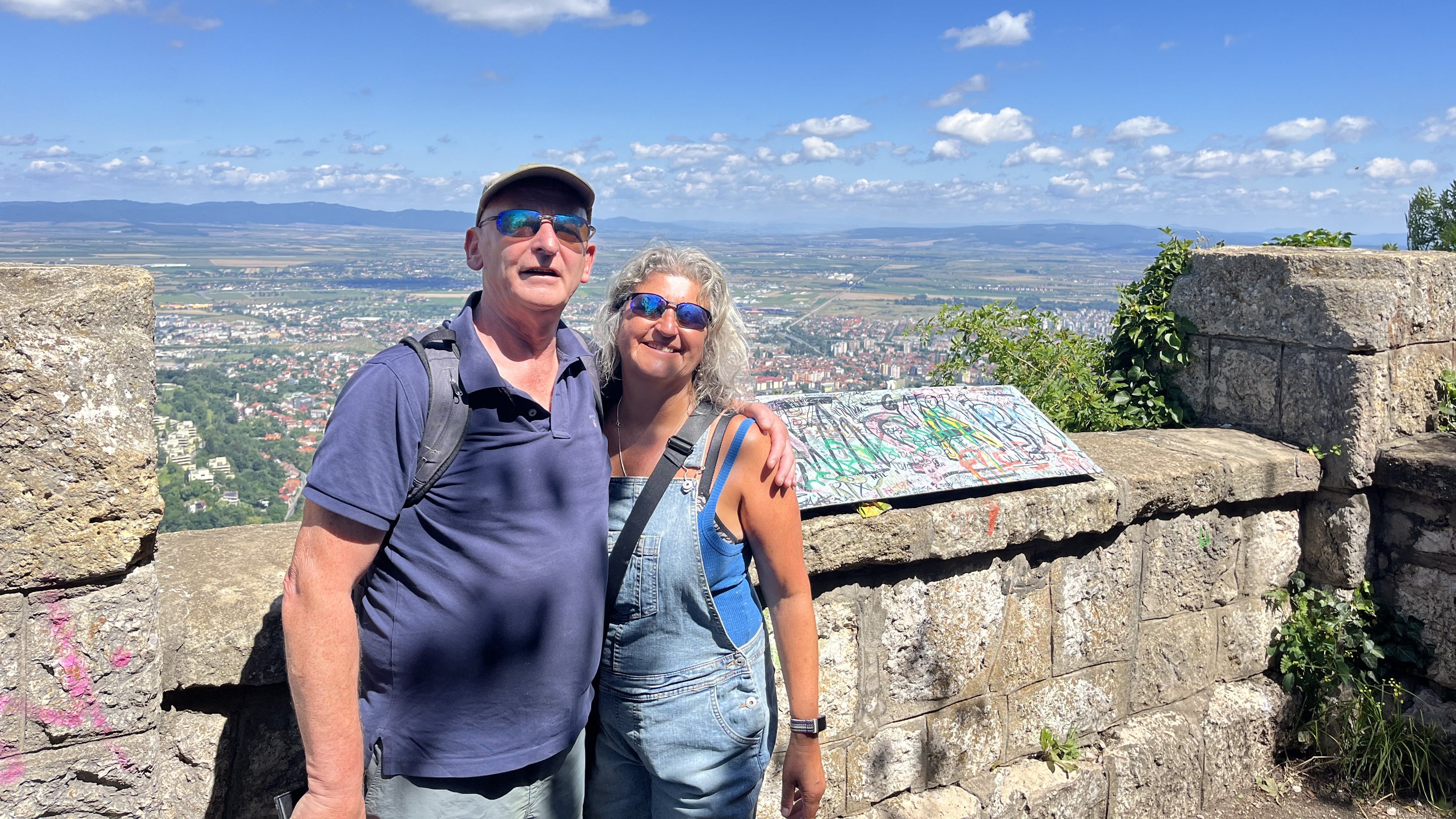
Tampa Mountain is 960 metres over sea level. It is possible to hike or take the cable car to the top where there are views of the city and surrounding Carpathian Mountains.
We took the cable car up. If you are in the area it is definitely worth taking the cable car up. The views over the city are great.
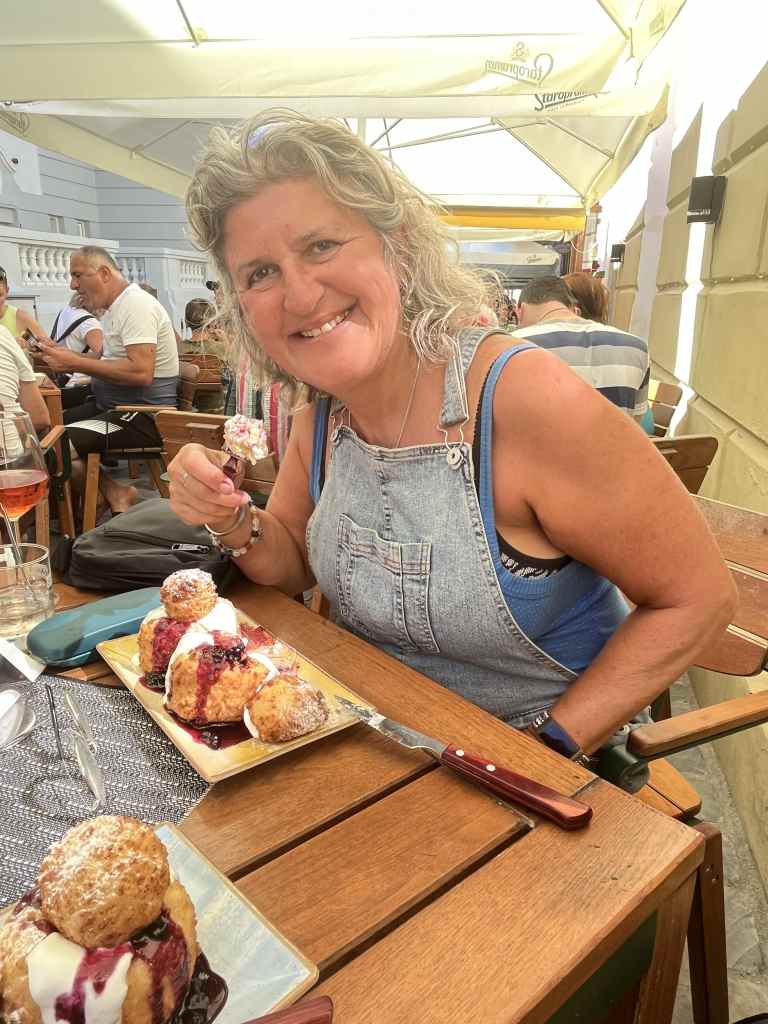
Whilst we were in Romania we were told that we must eat the traditional Romanian desert called Papanasi which is fried or boiled pastry with jam and sour cream. We found it to be very heavy and I could not eat it all. In fairness they were huge, we should have shared one but we didn’t realise how big they would be! Luckily we had just with a coffee in the afternoon and not as an actual desert.

Our next stop after Brasov is Liberty Bear Sanctuary and Bran Castle (Dracula’s castle), this is where our next post will start.
If you would like to receive a notification every time a post goes live then fill in your e mail and hit the subscribe button below.
You can also follow us on Facebook and instagram, just click the icons below.

 Our Life on the Road
I reckon the first fortified church we visited was in Boston of all places, and your mention of the Teutonic Knights I also remember from somewhere. I love Dee’s idea of you tagging, there is no way Les would allow me to do that! Lol… another fabulous post Jo, full of interesting information
LikeLiked by 1 person
Thank you . I wondered what you meant by ‘tagging’ then I realised 😂 . I’ve never heard it called that before! Maybe an Aussie thing?
LikeLike